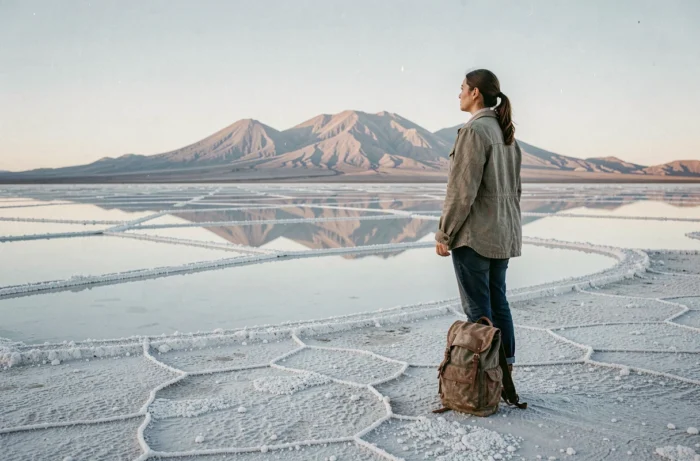
The unusual journey is no longer just about ticking off a list of famous monuments or unpacking in a distant country. In recent years, the way travelers conceive their discoveries has profoundly changed. Originality now lies in micro-stops slipped between two transfers, in atypical accommodations subject to unknown rules, or in European destinations that most guides still overlook.
Micro-stops and intermediate destinations: the unusual journey unfolds during the trip
Most articles on unusual travel focus on the final destination. A recent trend reverses this logic: the experience is built during the journey itself. Travelers transform their transfers between major cities into opportunities to explore smaller towns, viewpoints, museums, or UNESCO sites, without extending the total duration of the stay.
This principle of unusual travel through intermediate stops adds an additional destination to the itinerary without altering the schedule. It illustrates a shift towards slower and more immersive experiences, counter to the logic of a direct flight to an Instagram spot.
In practical terms, this can take the form of a one-day stop in a small town crossed by the train, or a detour by road to an unknown natural site. The catalog of 1001 Découvertes lists these types of itineraries built around unexpected stops, where the journey itself becomes part of the trip.
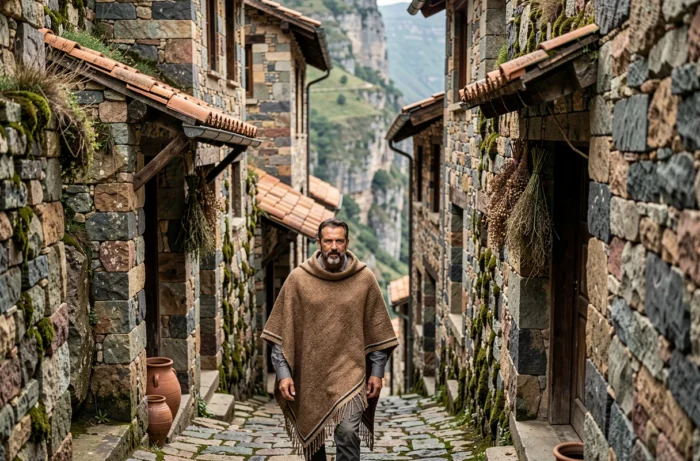
Unusual accommodations in France: a regulatory framework to know before booking
Treehouses, transparent bubbles, tiny houses, caravans: the offer of atypical accommodations has multiplied in France. What travel guides rarely mention is the legal gray area surrounding these structures.
No specific regulatory framework exists for unusual accommodations in France. These structures are subject to a cross-section of three distinct bodies: the urban planning code, the tourism code, and the construction code. Classification depends on criteria such as the duration of installation, ground area, or connection to networks.
What this means for the traveler
An accommodation that does not comply with urban planning rules may be forced to close mid-season. Since the end of 2024, a legislative tightening in France (known as the “anti-Airbnb law”) has strengthened the obligations of landlords, including for atypical accommodations located in tourist-sensitive areas like mountain resorts.
- Check that the landlord has a municipal registration number, mandatory in municipalities that have established it
- Verify the presence of a tourism classification or a declaration at the town hall, especially for lightweight structures (yurts, tipis, cabins)
- Prefer platforms that explicitly display the regulatory status of each listing
Field reports vary on this point: some departments apply the rules strictly, while others tolerate intermediate situations. A savvy traveler benefits from asking the owner directly before booking.
Unusual destinations in Europe: seven stops that rankings ignore
Lists of “unusual destinations” often recycle the same countries (Bolivia, Mongolia, Iceland). Even in Europe, several stops offer a comparable change of scenery for a fraction of the budget and carbon footprint.
Cities and regions to explore off-season
A recent report indicates that travelers increasingly favor cultural immersion over pure adventure or luxury. This trend benefits medium-sized European cities, less saturated than tourist capitals.
- Matera (Southern Italy): a cave city inhabited since prehistoric times, accessible by train from Bari
- Plovdiv (Bulgaria): intact Roman city center, active art scene, among the lowest accommodation costs in Europe
- The Azores (Portugal): volcanic archipelago in the middle of the Atlantic, hiking on almost deserted trails outside of July-August
- Georgia: between the Caucasus and the Black Sea, a unique cuisine and perched monasteries accessible without a visa for European nationals
The common thread of these destinations: they are suitable for both family travel and solo circuits, and their visitor numbers remain low enough to offer a true sense of space.

Overtourism and walking trips: the antidote that reshapes itineraries
Overtourism has pushed several European countries to take restrictive measures (visitor quotas, entry fees, temporary site closures). At the same time, walking holidays are emerging as a concrete response to overcrowding.
Walking mechanically redistributes flows. A hiker on a long-distance trail spends locally, sleeps in rural accommodations, and accesses landscapes untouched by motorized tourism. The coastal paths of Portugal, shepherd trails in Crete, or greenways in the Basque Country illustrate this dynamic.
Traveling differently without sacrificing comfort
Itinerant hiking does not necessarily mean sleeping in a tent. Many circuits in France and Europe combine walking stages with nights in guesthouses, lodges, or small hotels. Luggage transport can be delegated to a transfer service. A well-designed walking circuit offers an immersion that traditional travel does not replicate.
The demand for more responsible travel continues to grow in Europe, according to sector tracking data. This trend is not a passing fad: it reflects a structural change in expectations, where a slow pace and contact with nature take precedence over accumulating destinations.
Preparing for an unusual journey today requires a different approach than it did ten years ago. The destination matters less than how to get there, the choice of accommodation raises real regulatory questions, and the most memorable itineraries often pass through places that no one had planned to visit.