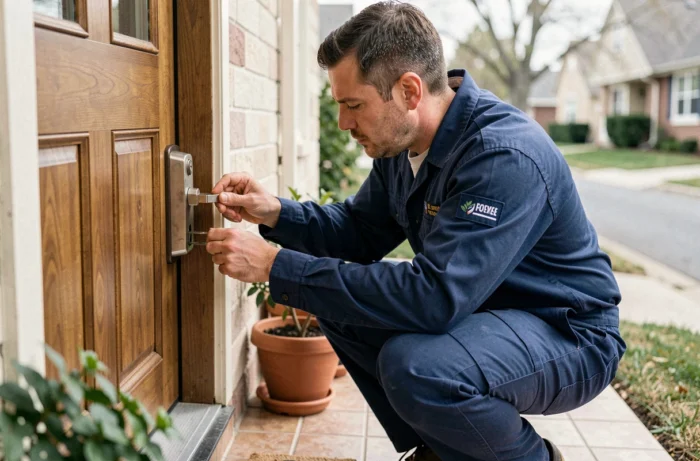
Choosing a locksmith to secure your home involves evaluating concrete signals even before a professional crosses the threshold. The quality of a locksmith is measured less by their online visibility than by verifiable criteria: phone pre-diagnosis, non-destructive opening capability, transparency of the quote. This article reviews the indicators that separate a reliable craftsman from an opportunistic repairman.
Phone pre-diagnosis: the filter that few individuals use
Before comparing quotes or reading reviews, the first phone contact provides actionable data. A competent locksmith does not simply offer a time slot: they ask specific questions about the condition of the door, the position of the keys, the type of lock, and the possible existence of a break-in.
This pre-diagnosis guides the equipment brought and the quoted price. A professional who asks whether the key is broken in the cylinder or if the door has slammed is already adapting their intervention method. In contrast, a contact who announces a fixed price without asking questions is not trying to understand the problem; they are looking to sell a service call.
Several locally listed craftsmen, like those found on https://serrurerie-valbusa.fr/, structure this first exchange to assess the complexity before traveling.
Three elements to listen for during this call:
- Does the locksmith ask for the model or brand of the lock? This question reveals a habit of technical diagnosis, not just a simple appointment scheduling.
- Does he offer a price range distinguishing between simple opening and complete replacement? The distinction between these two scenarios radically changes the cost.
- Does he mention a surcharge for evening or weekend service before you ask? An unannounced night rate is a warning signal.
Non-destructive opening or lock replacement: what the technical choice reveals
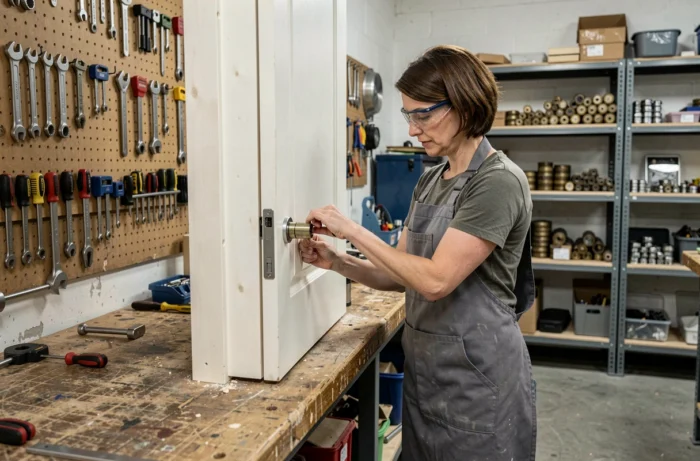
A rarely addressed angle in consumer guides concerns the method of opening. A serious locksmith systematically prioritizes non-destructive opening before considering drilling or replacing the cylinder. This approach preserves the existing lock and reduces the bill.
A reliable professional does not immediately start with the drill. Drilling only occurs after attempting less invasive techniques (picking, bypassing, decoding). When a craftsman directly proposes a complete replacement without testing an alternative, two hypotheses arise: they lack technical skill, or they seek to charge for an additional part.
| Criteria | Reliable Locksmith | Locksmith to Avoid |
|---|---|---|
| Priority Method | Non-destructive opening (picking, bypass) | Immediate drilling without prior attempt |
| Quote Before Intervention | Written, detailed (labor, parts, travel) | Oral, vague, modified after intervention |
| Questions on the Phone | Type of lock, position of the key, context | Address and time slot only |
| Verifiable Physical Address | Local or workshop consultable online | PO Box or untraceable address |
| Registration | SIRET verifiable in official records | No mention or incorrect number |
This table summarizes the observable gaps between two profiles. The method of opening is the most discriminating technical criterion, as it requires expertise that poorly qualified repairmen do not master.
Identity Verification of the Locksmith: SIRET and Physical Address
Online reviews and word of mouth remain useful, but they do not replace factual verification. Two checks take less than two minutes and filter out the majority of dubious providers.
The SIRET number appears on quotes and invoices. It can be checked in public databases (annuaire-entreprises.data.gouv.fr, for example). An active SIRET associated with a locksmithing activity confirms the legal existence of the company. A craftsman who refuses to provide this number or whose SIRET corresponds to another activity does not deserve your trust.
The physical address is the second filter. A locally established locksmith has a workshop or identifiable premises. This local presence guarantees a rapid intervention capacity and traceable responsibility in case of disputes. In contrast, a simple PO Box or fictitious address often indicates a middleman who outsources to traveling repairmen.
The Written Quote as Legal Protection
The detailed quote is not just a good business practice. As soon as an intervention exceeds a certain threshold, the written document becomes a legal reference in case of dispute. The quote must clearly separate the cost of labor, the price of parts (cylinder, lock, handle), and travel expenses.
Any additional charge not mentioned in the initial quote can be contested. A craftsman who modifies the amount after starting the work without prior written agreement is operating outside the normal framework of locksmithing services.
Security Lock and Installation: Questions to Ask Before Work
When the intervention goes beyond simple repair and involves the installation of a reinforced security lock, the choice of professional is as important as the choice of equipment. A poorly installed high-security cylinder offers less protection than a standard lock installed correctly.
- Does the locksmith recommend a specific brand, explaining why it suits your door (thickness, material, type of frame)? Personalized advice is worth more than a list of references.
- Does he offer a multi-point lock suitable for the actual risk level of your home? An apartment on an upper floor and a house on the ground floor do not require the same configuration.
- Does he provide a warranty on the installation, separate from the manufacturer’s warranty on the equipment? The installation warranty holds the locksmith responsible for the quality of the installation.
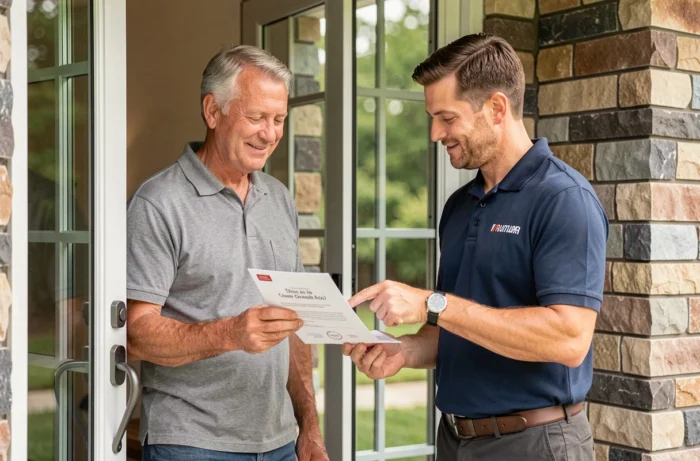
Choosing a locksmith to secure a home relies on concrete verifications rather than promises. A structured phone pre-diagnosis, a preference for non-destructive opening, a verifiable SIRET, and a detailed written quote constitute the four most reliable filters. The rest, including online reviews, serves as a complement, never a replacement.