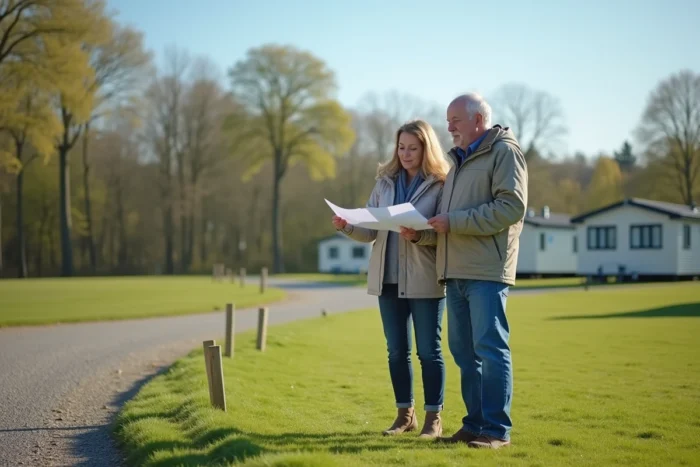
Buying a plot in a leisure residential park is not like a traditional real estate purchase. The leisure residential park operates under its own management rules, development constraints, and a collective governance that impacts the daily life of the owner. Before signing, the question is less about the price of the plot than about what the internal regulations really allow.
Plot in a leisure residential park vs. traditional land: how legal regimes differ
| Criteria | Traditional land (subdivision or scattered) | Plot in a leisure residential park with transfer |
|---|---|---|
| Applicable urban planning regime | Local urban plan / POS of the municipality | Local urban plan + internal regulations of the leisure residential park |
| Freedom of construction | Total within the limits of the local urban plan | Restricted (model of chalet, materials, height sometimes imposed) |
| Management of common spaces | Municipality or subdivision homeowners’ association | Homeowners’ association or co-ownership syndicate of the park |
| Recurring charges | Property tax, connections | Property tax + road charges, green spaces, collective facilities |
| Rental use | Free (subject to local regulations) | Subject to written authorization in most leisure residential parks |
This table highlights a structural gap. The owner of a plot in a leisure residential park remains subject to a dual framework: that of the municipality and that of the park. The purchase of the plot does not guarantee freedom of development. Some leisure residential parks impose a specific chalet manufacturer or prohibit materials that are otherwise common in light construction.
To delve deeper into these specifics, a guide on purchasing land for leisure residential parks details the obligations related to the transfer of plots and the checks to be made before committing.

Internal regulations of the leisure residential park: constraints not always mentioned in the sales agreement
The internal regulations of a leisure residential park are the document that conditions life on the plot after purchase. It sets the rules for placement, maintenance, and use of the land. The problem: this document is not always attached to the preliminary sales contract.
Restrictions on light recreational housing
A leisure residential park may limit the maximum height of the chalet, impose a color palette for facades, or require that the light recreational housing comes from a builder approved by the manager. Checking the restrictions on the chalet model before signing avoids discovering later that a development project is incompatible with the park.
Collective charges and governance by homeowners’ association
Most leisure residential parks with plot transfers operate through a free homeowners’ association (ASL). This structure manages internal roads, green spaces, and common facilities (pool, playgrounds, networks). Annual charges vary significantly from one park to another.
Before purchasing, it is essential to request the minutes of the last general meetings of the ASL. They reveal the voted works, any disputes, and the actual level of charges. The ASL structures the governance of the leisure residential park and distributes charges among co-owners.
Rental investment in a leisure residential park: a return under conditions
The purchase of a plot in a leisure residential park attracts investors aiming for seasonal rentals, especially in tourist regions of France. Profitability depends on several parameters that are rarely aligned from the outset.
- The subletting authorization must be obtained in writing from the manager of the leisure residential park. Without this written authorization, any short-term rental is subject to penalties.
- The actual occupancy rate depends on the location of the park, the quality of the common facilities, and seasonality. A leisure residential park located inland without direct access to a major tourist site generates limited rental income.
- The charges of the ASL, property tax, and maintenance of the mobile home or chalet reduce the net margin. The investment only becomes profitable after several seasons of actual rental.
On the other hand, a well-located leisure residential park with a transparent manager regarding rental rules offers a more secure framework than a spot in a traditional campsite, where the owner of the mobile home holds no rights to the land.
Access control and easements: two checks often overlooked at purchase
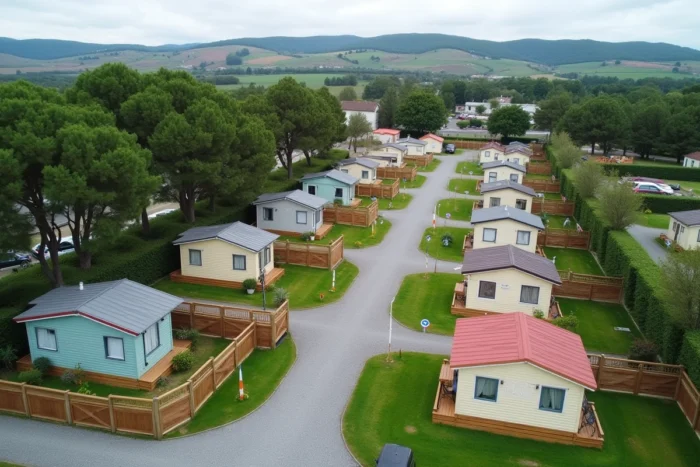
Physical access to the plot is a specific point of vigilance for leisure residential parks. The land may be enclosed within the park, accessible only by a private road managed by the ASL. If this road is degraded or if its maintenance is the subject of a dispute among co-owners, access to your own plot can become a concrete problem.
Easements for passage, networks, or views must be included in the specifications of the leisure residential park. They apply to all new owners. Requesting a state of easements from the notary before signing the preliminary contract remains the only way to secure this point.
What to demand from the seller
- The complete internal regulations of the leisure residential park, including its technical annexes
- The last three minutes of the ASL general assembly
- The specifications of the park with the plan of easements
- The written authorization for seasonal rental if the purchase aims at a rental investment
These documents allow for measuring the gap between the commercial promise of the leisure residential park and the reality of the co-ownership. A seller who refuses to provide them before signing the preliminary contract is a warning sign.
The purchase of a plot in a leisure residential park relies on the careful reading of documents that few buyers spontaneously request. The plot itself is less important than the collective framework surrounding it. It is the quality of the park’s governance, the clarity of its regulations, and the transparency of its manager that determine the real value of the investment.