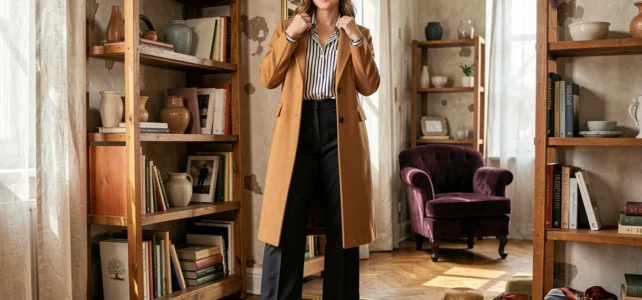
Clothing style refers to the recurring combination of cuts, colors, and materials that a person chooses to present themselves daily. This combination is neither confused with fashion (which changes every season) nor with dress code (which adheres to a social norm). Building a unique style requires understanding some concrete mechanisms before filling one’s wardrobe.
Micro-trends and algorithms: why looks all seem the same
Platforms like TikTok and Instagram are renewing style labels at an unprecedented pace. Clean girl, office siren, commuter core: these so-called “-core” micro-trends sometimes succeed each other within a few weeks.
The problem lies in the very functioning of algorithms. The content and silhouettes that conform most closely to dominant visual codes are the ones that platforms promote the most. The result: the desire for uniqueness paradoxically produces a uniformity of looks, particularly among Gen Z.
Adopting a personal style thus involves accepting a slight social risk. A piece that does not fit into any algorithmic category will be less “liked,” but it is precisely this discrepancy that creates a recognizable clothing identity. Understanding this mechanism helps filter the suggestions that social networks impose and make more deliberate choices in front of one’s wardrobe.
To delve deeper into these mechanisms between fashion and trend analysis, the fashion section of Je Comprends Enfin offers useful reading keys.
Capsule wardrobe: building a coherent wardrobe with few pieces
A capsule wardrobe is based on a simple principle: a limited number of garments, each of which can be combined with most of the others. The goal is not minimalism for its own sake, but the elimination of visual noise, those orphaned pieces that are never worn because they go with nothing.
The foundation consists of functional categories, not aesthetic categories. Before buying, the useful question is not “is it pretty?” but “how many existing outfits does this piece work with?”.
The pivot pieces
- A straight-cut blazer in a neutral color (navy, black, beige). It structures both jeans and a flowing dress and transitions from the office to a casual evening.
- A mid-rise straight or slightly flared pant, made from sufficiently dense fabric to maintain its shape after several washes. This is the most worn piece in a functional wardrobe.
- A simple, solid-colored dress whose length allows it to be worn with sneakers as well as with dress shoes. It alone replaces two top-bottom combinations.
- A medium-sized, structured bag in a color that matches no palette. It is the accessory that visually unifies a heterogeneous outfit.
Each pivot piece must work with at least three other garments in the wardrobe. If it doesn’t, the piece is decorative, not structural.
Colors and materials: technical choices that change a look
Classic advice on colors often boils down to “wear what flatters you.” This recommendation is too vague to be actionable. The technical question revolves around the restricted palette: choosing three to four base colors that combine with each other, then occasionally adding an accent shade.
A wardrobe built around black, off-white, and navy blue, for example, can effortlessly accept a rust accessory or a mustard scarf. A wardrobe without a chromatic backbone forces one to think every morning, which discourages most people.
Materials and perceived quality
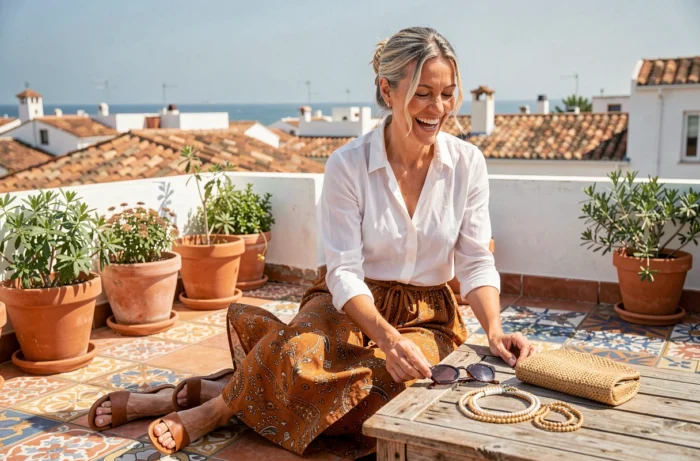
The quality of a garment is first read in the material, not in the brand. Heavy cotton, wool that doesn’t pill after three washes, linen that wrinkles without distorting: these tactile criteria influence the overall fit of a silhouette much more than the cut alone.
Before a purchase, crumpling the fabric in hand and observing its reaction provides more reliable information than any marketing label. A garment made from poor material will never compensate for its cut through style.
Eco-responsible fashion and sustainable style: buy less, choose better
Eco-responsible fashion is no longer reserved for a few niche brands. Its growth in recent years is concretely changing the way personal style is built. Buying fewer pieces, but of better quality, aligns perfectly with the logic of the capsule wardrobe.
The most useful reflex is to assess the cost per use of a garment. A blazer worn a hundred times in a year costs, per use, a fraction of the price of a trendy top worn twice and then forgotten. This simple calculation naturally guides one towards durable and versatile pieces.
- Check the fabric composition: a high percentage of natural fibers (cotton, linen, wool) often indicates better longevity than a predominantly synthetic blend.
- Favor visible finishes: regular seams, securely attached buttons, clean hems. These details reveal the level of craftsmanship.
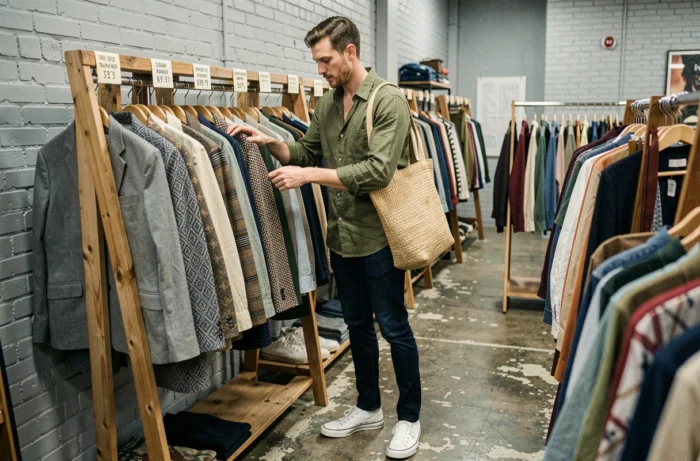
- Consider second-hand as a reflex, not as a plan B. Quality vintage pieces have often stood the test of time without losing their shape, proving their durability.
Adopting a unique style does not rely on the accumulation of clothes or following micro-trends. It is a process of subtraction: removing what does not work together, keeping what naturally associates, and resisting the pressure of algorithms that push towards conformity. The most elegant garment in a wardrobe is often the one worn most frequently, not the one purchased most recently.