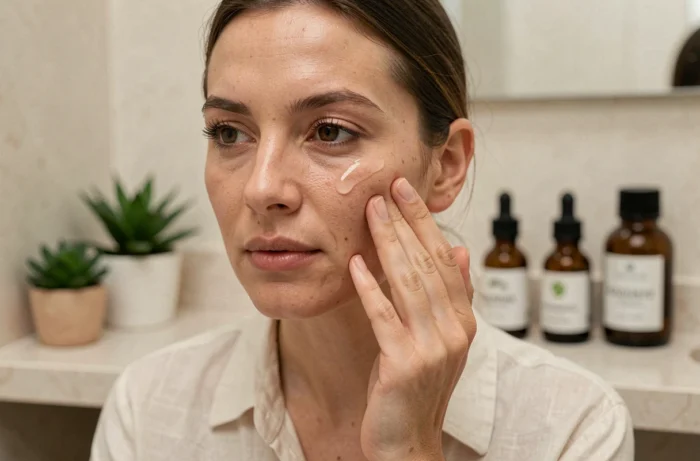
The global market for natural cosmetics surpassed $55.4 billion by 2026, according to industry data. This growth reflects a sustainable shift in purchasing habits, where the composition of a product weighs as heavily as its marketing promise. Natural cosmetics and innovative skincare are no longer opposing forces: they are converging towards formulas that borrow from biotechnology without sacrificing transparency about ingredients.
Biotechnological Actives: When Natural Surpasses Plant-Based
Reducing natural cosmetics to plant extracts no longer corresponds to the reality of current formulations. Brands investing in research are now working with next-generation peptides, exosomes, and targeted delivery systems that did not exist three years ago.
The principle remains the same: to reproduce molecules found in nature through fermentation or biosynthesis, without resorting to the intensive extraction of plant resources. Bakuchiol, a plant-based alternative to retinol, exemplifies this logic. In contrast, actives like PDRN or NAD+ involve more advanced engineering, straddling the line between dermocosmetics and medical care.
The catalogs of specialized distributors reflect this evolution. For example, one can browse the ranges offered on https://www.kosmetic.fr/ to see how these actives are translated into consumer products. The open question remains regarding regulation: the claims allowed in Europe do not always keep pace with formulation innovation, and field reports vary on the actual long-term effectiveness of some of these new actives.

Body Anti-Aging Treatments: An Underestimated Beauty Trend
The bulk of anti-aging innovation has focused on the face for years. The movement emerging in 2026 broadens the scope: anti-aging actives are now extending to body care, with the introduction of “body retinoids” and treatments targeting the décolleté, hands, or arms.
This shift is not trivial. Body areas exposed to the sun age according to the same mechanisms as the face, yet they have long been treated with basic formulas. Newer textures, lighter and with quick absorption, make the daily application of an active treatment on a larger body surface credible.
Sun Protection and UV Filter Credibility
The credibility of sunscreens has become a topic in its own right. Following the controversies of 2025 regarding the reliability of certain screens, the industry is turning to next-generation UV filters, such as bemotrizinol, which offer a broader spectrum of protection. Consumer trust in sunscreens is a direct issue for brands claiming a natural approach, as a questionable filter is enough to discredit an entire range.
At-Home Beauty Devices: LED Photobiomodulation and Connected Treatments
At-home skincare devices are moving out of the niche segment. LED masks, photobiomodulation devices, microcurrent tools: these technologies, once reserved for dermatology offices, are becoming part of daily routines.
Their use is oriented towards maintenance between professional appointments, not as a replacement for dermatologists. This nuance matters because the available data do not allow for conclusions about the long-term effectiveness of exclusively home use, without medical follow-up.
- LED masks primarily target redness, mild acne, and collagen stimulation, with sessions of just a few minutes per day.
- Microcurrent devices promise a temporary tightening effect, which is interesting as a complement to a topical routine.
- Connected skin analyzers, capable of measuring hydration, pores, and elasticity, allow for the adjustment of products used based on the actual state of the skin.
The price of these devices remains a barrier for some consumers. Brands offering accessible ranges are gaining ground, but the issue of device sustainability (battery, obsolescence, recycling) is still not widely addressed.
Textures and Formats: A Criterion of Cosmetic Innovation in Its Own Right
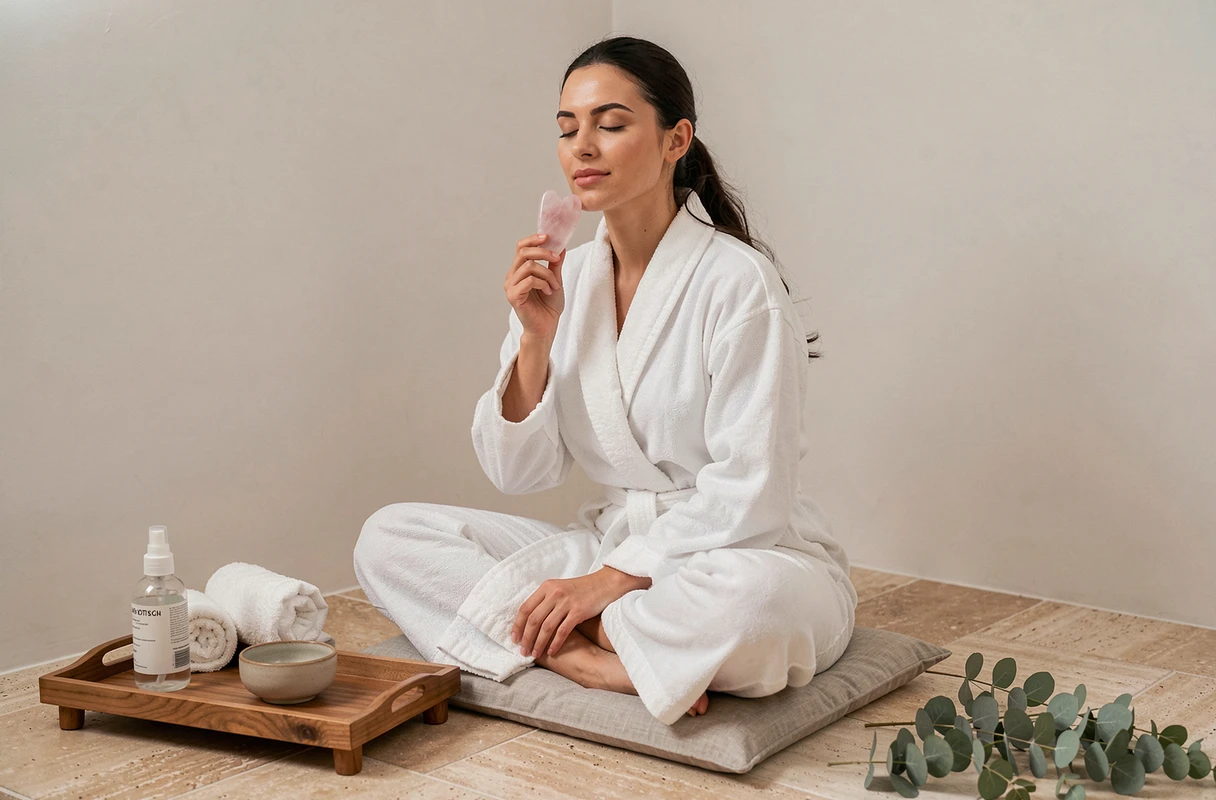
The texture of a treatment is no longer a marketing detail. Several recent launches focus on formats that change texture upon application: balms that melt into oil, gels that become cream upon contact with the skin, biphasic serums to shake before use.
This work on formulation responds to a specific expectation: sensory pleasure as a factor of adherence. A product that is pleasant to apply will be used regularly, which directly conditions its results. Consumers are increasingly making choices between two products with equivalent compositions based on texture and fragrance.
Skinimalism and Short Routines
In contrast to the accumulation of products that marked the previous decade, the trend towards skinimalism favors routines of two or three steps with multifunctional formulas. A serum that combines antioxidant, moisturizing, and light protection replaces three distinct products.
This approach reduces the overall cost of the routine and limits the risks of ingredient interactions. For sensitive skin, fewer products mean less risk of reaction.
- A gentle cleanser, an active serum, and sun protection form the foundation recommended by most dermatologists.
- Multifunctional plant oils (jojoba, squalane) are making a strong comeback as an alternative to complex creams.
- Solid formats (shampoos, cleansers, deodorants) are progressing, driven by the reduction of plastic packaging.
The natural cosmetics market in 2026 is not just about a label or a list of banned ingredients. The demand focuses on proof of efficacy, transparency of the supply chain, and the ability of brands to integrate innovation without sacrificing the clarity of their formulas. The coming years will reveal whether biotechnological actives and connected devices live up to their promises beyond the marketing cycle.